Homemade Baby Food

When my daughter started eating solids, I made her a promise.  I would not feed her any baby food that I would not also eat myself.  After opening and tasting 2 jars, I realized we had a problem.  The consistency and the flavor the jarred baby food was just all wrong to me.  So, I decided to make my her baby food myself.
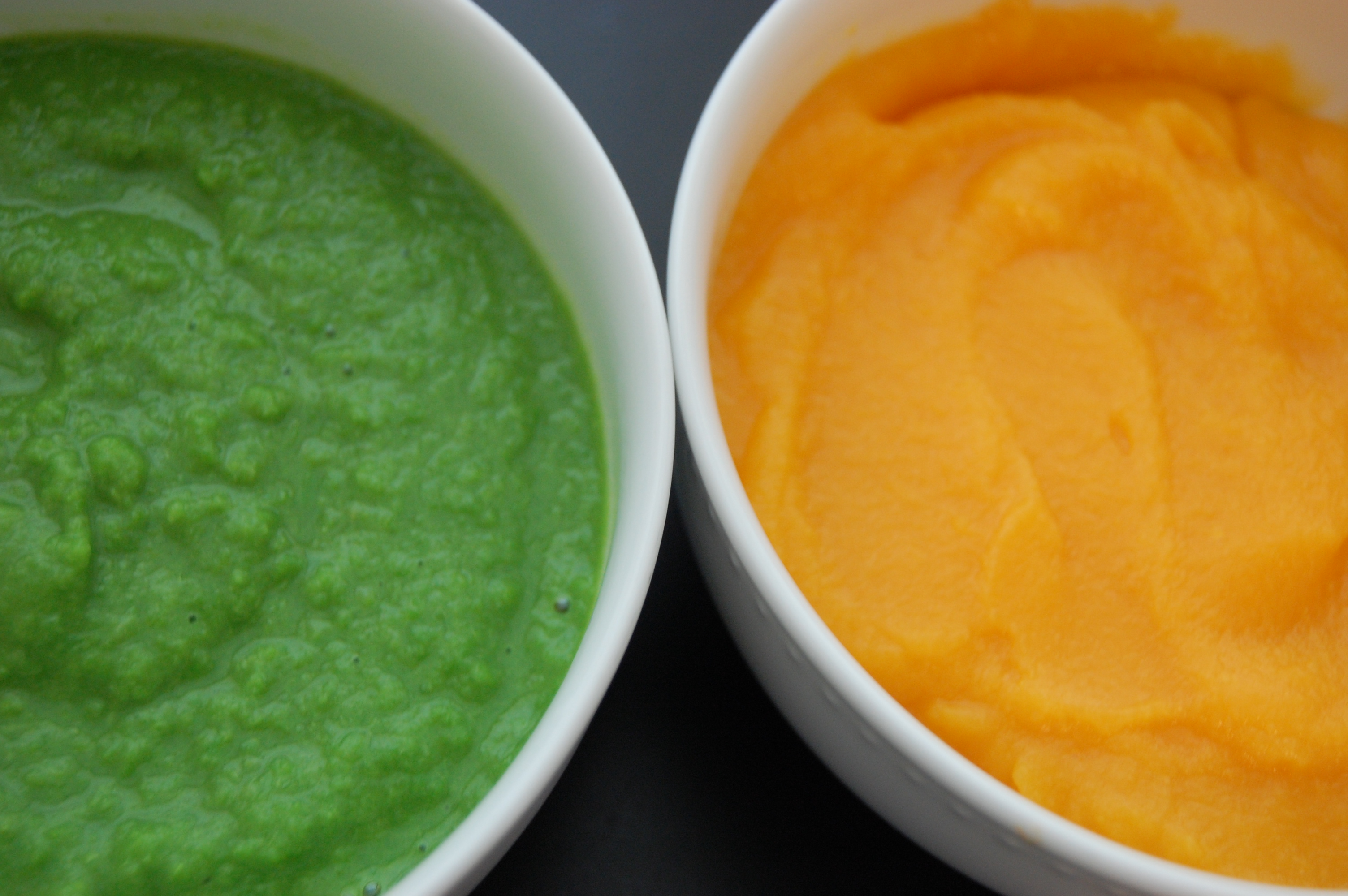
Besides having better flavor, I quickly realized that making baby food also had other benefits.  It created much less waste than purchasing and throwing away all of those baby food jars, which made it an earth friendly option.  It also was significantly less expensive.  For example, one 2.5 oz jar of Gerber peas will cost about $.70 or $.28/oz.  I was able to purchase a small bag of frozen peas on sale for about $1.00 and from that bag made 20 ounces of baby food.  That’s only $.05/oz for home made pureed peas.  Making the peas instead of purchasing them was a $.23/oz savings!

I will admit, however, that as a new mom it wasn’t always easy to find time to make baby food.  One trick I found helpful was making it in bulk and freezing which made the task quite manageable.

How to make baby food
It is hard to give a specific recipe for making baby food because it is actually very simple.  The only trick is that every fruit and vegetable will have a different cook time.  Basically, you take fresh fruits and vegetables, steam or bake them, and then blend them into a puree.  Some will puree beautifully and others need a little bit of water to get them to a good consistency for baby.  I own a Beaba Cook, which steams and purees all in a few easy steps, however a sauce pan and a blender will give you the same result.

How to store baby food

After you have cooked and pureed your fruits and vegetables, you can take a regular old ice cube tray and pour the puree into the tray cubes.  Freeze for a couple hours and then remove the frozen baby food cubes and place them in resealable freezer storage bags.  Label them with the date and the type of puree.  I always used up the frozen baby food within a month to insure it stays fresh.  Each cube is roughly 1 oz of food.

When you are ready to use the food, just place some frozen cubes in a bowl and heat until room temperature of slightly warmed.  You can also let them thaw overnight in the refrigerator.

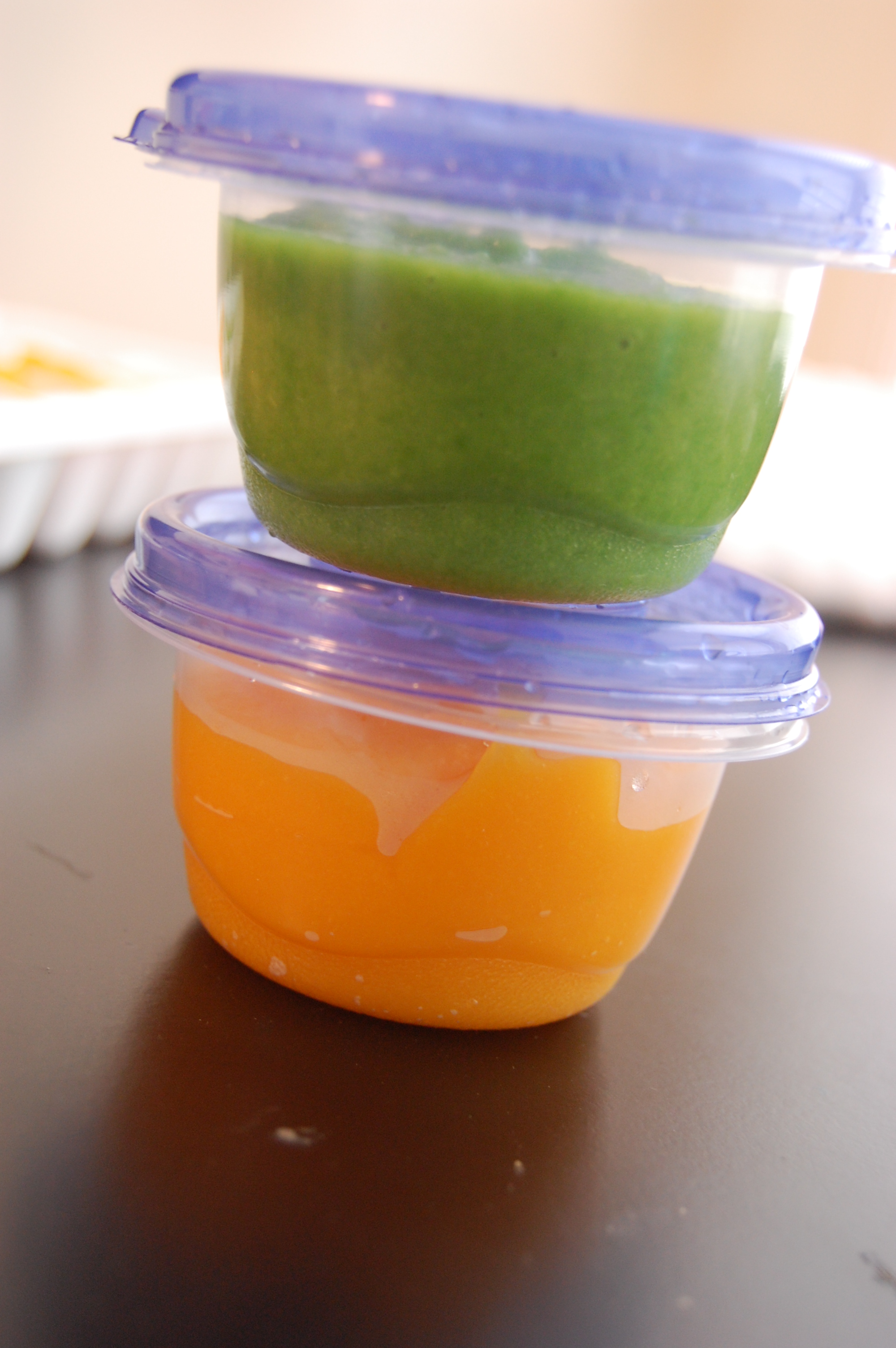
I also loved using 4 oz round gladware containers.  They were the perfect size and make taking food on the go very convenient.  And don’t worry all of you conscientious moms, gladware is now bpa free!
Get Creative

Who says baby food need to be boring?  Once you get the hang of making your own baby food, you can start to have a little fun with it.  Here were some of my daughter’s favorite flavors:

pureed peas with mint leaves
pureed baked apples with raisins
pureed sweet potatoes with a dash of cinnamon

Although it may take a little extra time, making your own baby food is a great choice if you are trying to be kinder to the earth. I creates significantly less waste, just think about all the glass jars you won’t be purchasing and throwing away.  And I bet your baby will enjoy the fresh flavors and vibrant colors!

2 Comments

Filed under Cook, Family, Garden

Compost 101

Yard trimmings and food residuals together constitute 23 percent of the U.S. waste stream, according to the EPA. Pretty gross.  However that can be reduced with a little thing called compost!

Compost is decomposed organic matter that creates a nutrient-rich, chemical-free fertilizer and helps prevent plant disease, all while reducing the amount of junk you’re putting into landfills. Plus it’s totally free.

Composting

Getting Started:
Compost needs a good balance of “green” matter (nitrogen) and “brown” matter (carbon), plus the standard oxygen & water. Luckily, none of this is hard to come by!

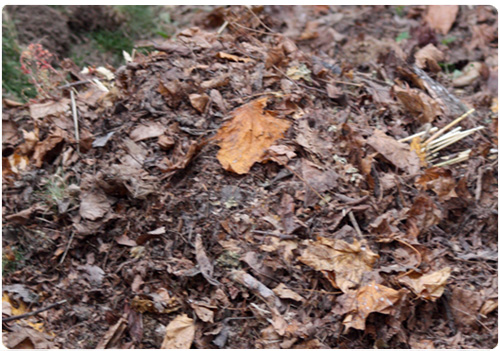
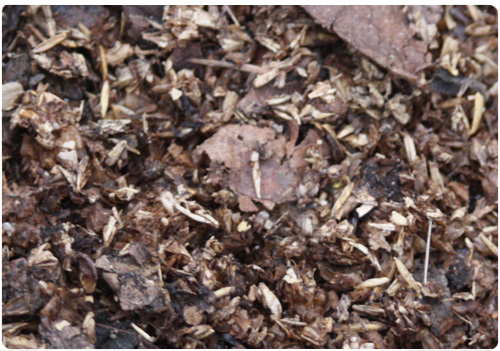
Pick a dry, shady spot or large compost container for your pile (mine is behind the garage…it’s not exactly pretty stuff).  Toss green matter and brown matter in the pile, watering if it starts getting too dry. Compile food waste from your house and yard waste and continue adding to the pile, trying to keep the brown:green ratio fairly equal. Use a pitchfork to turn and aerate the pile on a weekly or bi-weekly basis, rotating the dry materials into the middle. Once the matter is dark, clumpy and resembling dirt – usually the bottom of the pile first – it’s ready!

What You Can CompostNow that the, er, dirty work is done, you have two options for using it in your garden:
A: Scoop a trowel-full into the hole that you’ve dug for your plant and place plant on top or spread the compost around the base of your established plants. Mix well with surrounding dirt.
B: Create a “compost tea” by putting compost into a strainer bag or cheesecloth and letting it steep in hot water. Transfer to a spray bottle and spray at the base of plants or directly onto non-edible plants.

What You Can Compost:
grass clippings
dead leaves & flowers
eggshells
dryer lint
coffee grounds & filters
paper – especially shredded
paper towels and tissues
cardboard tubes, wood chips & sticks
spoiled fruits & vegetables
wine
stale bread
vacuum dust
spent grain (if you happen to homebrew)

What You Can’t:
animal-based food products like dairy, meat scraps, bones
pet poo
chemically treated yard waste
fatty or oil-based products
invasive or diseased plants

The Best Compost Accessories:
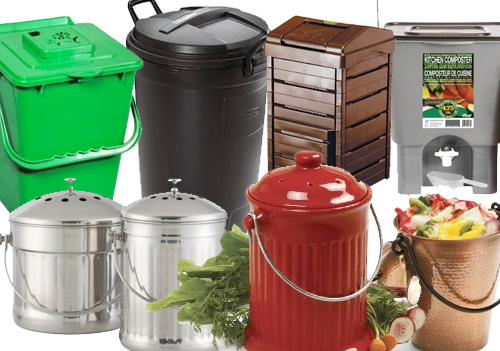
Because you’re not going to carry each piece of lettuce or every lint ball out to your pile, invest in a small kitchen container to stash your waste in. Kitchen compost bins have come a long way in both function (read: odor free!) and style so pick your favorite:
Kitchen Compost Bins

Clockwise from top left:
Exaco Trading Kitchen Collector, Wheeled Trash Can, Garden Compost Bin, Bokashi Indoor Composter, Copper Compost Pail, Norpro Red Ceramic Compost Keeper, Odor Free Compost Pail (my pail at home!)

Composting in an Apartment:
Since I have a yard, it’s easy to compost but it can be done in smaller spaces using an indoor bin, like those above. Do you compost in an urban setting? Tell us about it…I’m curious about what you’ve found works best and what you do with it afterward.

3 Comments

Filed under Garden

GIVEAWAY!: Organic, Shaken & Stirred Cocktail Book

Here at HAP, we’re pretty big on finding ways to be sustainable, budget-friendly and fabulous all at once. So with Earth Day coming up on Thursday, we’re dishing up a full week of earth-friendly posts and we’re kicking things off with a great GIVEAWAY!

One lucky reader will win a copy of Organic, Shaken and Stirred by Paul Abercrombie, which is full of delectable cocktail recipes featuring organic ingredients and organic alcohols. To enter, just leave a comment telling us one thing you’re doing this year to be more eco-conscious and we’ll pick a winner this Friday.

Organic, Shaken & Stirred, Organic Cocktail Recipes

Paul also gave us the insider scoop on extending organic from your plate to your glass and a sneak-peek at one of the recipes in his book (which sounds perfect for a summer BBQ!):

1. Give us your one minute bio.
I first became interested in mixology – beyond the teenage tippler’s sloshing rum into a half-empty can of Coke – during a trip to Italy. My then-girlfriend-now-wife Gail and I happened into the beautiful lobby bar of the Grand Hotel in Florence and asked the bartender to suggest a drink. “Negroni”, he said. At the first sip, we were hooked. Pleasingly bitter and sweet and tart all at once, Negroni was a revelation. For months after it was pretty much our house cocktail.

Of course, this was the only grownup drink I knew how to make. I began to seek out recipes new and old, and fresher, better-tasting ingredients for cocktails. Eventually, I connected with West Coast mixologists who were among the first to emphasize organic fruits, vegetables, and even spirits in their cocktails. As soon as I tasted these drinks, I was hooked all over again.

2. How did you get interested in organic cocktails and what inspired you to write a book?
My interest in organic cocktails was in many ways an extension of my interest in organic foods. As organic and farm-fresh foods began to take off some years ago, I noticed a disconnect at restaurants. Here you’d sit, enjoying a delicious meal of fresh, in-season foods, yet in the cocktail glass you’d be served the same pre-fab cocktail mix with Day-Glo cherry colored ingredients. I wondered why people didn’t care as much about what’s in your glass as what’s on your plate. Luckily, I began to run into mixologists such as Scott Beattie and H. Joseph Ehrmann who were already leading the charge to bring the kitchen into the bar. I began reaching out to them (read: pestering them). Soon it was a minor obsession.

3. Organic is a hot health topic but alcohol is not exactly “healthy” per se. Are there any health benefits to buying organic booze? Are they offset by the alcohol?
True…booze, organic or not, is still booze. You’re not going to be healthier if the 11 daiquiris you drank last night were organic. Still, as with food, the advantages of avoiding alcohol made with pesticides, fertilizers or fungicides are manifold. Though spirits are distilled – which, it’s argued, cleans the potentially toxic “junk” out of the mix – experts argue that organically grown grain has a better cell structure and that its natural microorganisms encourage the process of fermentation. Let’s face it: organic growing methods are healthier for growers, more sustainable and just plain taste better. (Oh, and most fans swear that organic cocktails are a recipe for more humane hangovers.)

4. What’s your favorite “ingredient” to use when making cocktails?
I’m really enjoying playing with organic ingredients typically found on plates or soup bowls – like rosemary, ginger and carrots. The sweetness and “carrotness” of an organic carrot is amazing.

5. For the home bar, what are 3 key bar tools and 3 key ingredients one should always have on hand?
Without a doubt, my can’t-live-without bar gizmo is my OXO Good Grips Mini Angle Measuring Cup, which allows you to accurately measure ingredients without having to crank your head sideways to check your measure. Also, a good old-fashioned hand lemon/lime juicer. And ice. Don’t skimp on the ice!

With only three ingredients – an alcohol, sweetener and some form of fresh citrus – you can make any number of sours, a foundational category of cocktail that’s sort of the equivalent of rock songs built on three chords. Simple, but great. For example, a margarita is tequila, agave nectar and lime juice. A daiquiri is rum, simple syrup and lime juice.

Once you get the hang of sours, introduce new ingredients such as elderflower liqueur or muddling in an herb. Don’t be afraid to deviate from recipes. If you like more or less sour or sweet in a drink, that’s the right way to make the drink – for you.

Spiked Blueberry Thyme Lemonade Organic Cocktail

Spiked Blueberry-Thyme Lemonade
8 organic blueberries
4 springs organic lemon thyme
3/4 oz simple syrup*
1 1/4 oz organic vodka (such as Reyka, Square One or Prairie Vodka)
1 oz spring water
1/2 oz elderflower liqueur
1/2 oz freshly squeezed organic lemon juice
1/2 oz yellow Chartreuse

In a cocktail shaker, muddle the blueberries, 3 thyme sprigs and simple syrup until blueberries are mashed.  Add vodka, water, elderflower liqueur, lemon juice and Chartreuse.  Fill shaker with ice and shake vigorously.  Strain into a tall glass filled with ice and garnish with the remaining thyme sprig.

* To make simple syrup, combine 1 C organic sugar with 8 oz water in a small saucepan and bring to boil.  Reduce heat and stir until sugar is completely dissolved.  Remove from heat and cool.  Syrup can be refrigerated in an air-tight container for up to a month.

12 Comments

Filed under Drinks, Interviews

Glee: Home Inspirations from a Gleek

I will say it loud and proud: I’m a Gleek! It may be the dream that my life will one day randomly break into song or the one-liners I get from watching the show each week, but I can’t get enough of Glee!

With the return of Glee for the spring season, I have been inspired to create a few home Glee inspiration boards. It is hard to argue with the pure genius of the musical sitcom humor of Glee, from the snarky Sue Sylvester to obesessive compulsive Emma. Inspiration for the home lies within every perfect detail of the show, from the bold red and yellow of the show’s logo, to Rachel Barry’s preppy argyle and Sue Sylvester’s track suits. Keep reading to find out how you can Gleek out your home!

Red and Yellow Inspirations

It is pretty hard not to feel uplifted with the red and yellow color combinations, perhaps it makes you want to break out in song. Choose anyone of these items or mix and match throughout your house. Make your own slushies with the Hamilton Beach red blender. But I suggest drinking them over getting one in the face. 

Clockwise from the top left: Etsy Ruthscrafts Abstract Cushion Covers; Hamilton Beach Electric Blender; Anthropologie Iris Quilt; CB2 Triumph Lounge Chair; Etsy Alice in Paris Red Poppies in Striped Vase; ModCloth Awesome Breakout Mug

Sue Sylvester Inspirations

Racing stripes and clipboards may not be your thing, but you can still take a thing or two away from Sue’s style. Use this sleek bathroom scale to stay on top of your game, mix yourself a shot of espresso to keep your energy boosted all day, admire yourself in these gorgeous West Elm mirrors or display your trophies on the CB2 Lobster Credenza. 

Clockwise from top left: Lunis Memory Bath Scale; West Elm Floating Wood Floor Mirror; Ikea Androp Rug; CB2 Halogen Lobster Cradenza; Jura Caspresso Espresso Machine; Lacoste Eclipse Club Bedding

Rachel Barry Inspirations

Everyone can be inspired by Rachel’s pristine preppy look and go-getter attitude. You may not want to wear knee-high socks or button your cardigan all the way up, but you can take her look and make it work for you. You can even DIY some argyle vases using that one sock you have lying around.

Clockwise from top left: Seersucker Scalloped and Embroidered Linens; Design*Sponge DIY Argyle Sock Vase; Etsy Recycled Sheet Music Picture Frame; Pottery Barn Melamine Talavera Salad Plates; Anthropologie China Plate Wall Clock; Crate and Barrel Brighton White Vanity/Desk

How would you Gleek out your home?

2 Comments

Filed under Decorate, Fab Finds

Community Supported Agriculture

Spring is in the air these days and it’s hard not to be excited for all of the fresh produce that is just around the corner.

This spring, I have decided to sign up for a CSA or “Community Supported Agriculture.”  A CSA is a way for consumers to buy fresh produce directly from a farmer and can be found in almost all communities.  Becoming a member will lead you to become a more conscientious consumer all while supporting your local community.

Here’s how it works.  As a consumer, you become a member of a local farm by purchasing a “share.”  You will pay a fee up front at the beginning of the growing season.  Then, every week you will go to a designated drop site and pick up a box of fresh produce from your farm.

The farmer will give you whatever is in season and looking the best that week.  For example, in late June you might receive a box of strawberries, broccoli and other early summer produce and come July or August you might have fresh ripe tomatoes and corn in your box.  The average size share is for a family of 4, although many farms are now offering half shares.

Becoming part of a CSA has advantages for both farmers and consumers.  Farmers receive your payments early in the spring which help them with their cash flow throughout the year.  They are also able to actually meet the people consuming their product which is very important to them.

As the consumer, you are then able to receive and enjoy fresh produce that was grown in your community.  You can also form a relationship with the farmer and sometimes even visit the farm to see how things are done.  My favorite part is getting to try new fruits and vegetables that I would normally not purchase at the grocery store.

If you live in the Milwaukee area and would like more information on finding Community Supported Agriculture, visit the Urban Ecology Center online.  Here you will find a 2010 CSA farm list.  Be sure to look for a drop spot that is convenient for you.

If you live in a different community, just search online or ask at your local grocery store if they know of any farms participating in a CSA.

I just signed up today with Full Harvest Farm and cannot wait to receive my first box in June!

Think Spring!

3 Comments

Filed under Cook, Garden

Art in Bloom

Over the weekend I went to the Milwaukee Art Museum for the lovely Art in Bloom opening. At the annual event, local florists are assigned a piece of art to serve as inspiration for creating an arrangement. Assignment pieces ranged from classic nudes to pop art to furniture, which showed that the florists themselves are truly artists too.

Check out some of my favorites below but first…

Decor Idea: Next time you buy flowers for a party consider using a piece of art (or furniture or photography) from your house as inspiration for your arrangement. Positioning the flowers near the piece creates a dramatic and cohesive statement that guests will be sure to notice.
Black Action Fritz Winter

Black Action, Fritz Winter – The winning arrangement had a gothic elegance that was mesmerizing in person. It totally deserved the win.

Betalo Nude, Robert Henri

Betalo Nude, Robert Henri:  The florist took a whimsical approach, deciding that this lovely lady needed a dressing robe.

Eero Saarinen Womb ChairEdge of England Cornelia Parker

Womb Chair, Eero Saarinen: A curvy and playful arrangement befitting of the iconic chair.
Edge of England, Cornelia Parker:  While I thought they could’ve done a lot more with the floral arrangement, this installation is one of my favorite pieces at MAM so I had to include it.

Cyclamen LithographMilwaukee Art Museum Haitian Art

Cyclamen III, Ellsworth Kelly:  Love the modern and simplistic approach
Les Trois Nonchon, Andre Pierre:  Funky, exotic florals feel right at home in the Haitian gallery

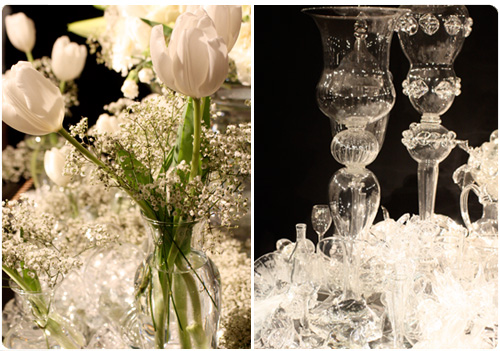
Beth Lipman Laid Table

Laid Table, Beth Lipman: If only my tablescapes were this ethereal!  A girl can dream…

Leave a comment

Filed under Fab Finds, Garden

Organic Safari Nursery Part II: DIY Painted Picture Frames

When looking to fill up the walls in Lincoln’s nursery, I came across a website that showed beautifully simple brown and white picture frames. I fell in love, but I was not in love with the price. My budget did not account for $60 frames, so I decided to take it upon myself to recreate the frames. 

I, by no means, consider myself a painter or an artist. I have a shaky hand and a propensity to hurry through projects that take great patience. Therefore, if I can create these frames, anyone can. 

I searched the aisles of Michael’s arts and crafts store and was able to pick up all necessary supplies for a total of $13. Here is what you need:

  • Unfinished wood picture frames
  • Acrylic paint
  • Wide and narrow paint brushes
  • Painter’s tape
  • Single hole punch
  • Cardstock

Start by painting each frame a solid color. I chose to have two brown and two off-white frames with alternating stripes and polka dots. Allow the frames to dry. 

For the striped frames, use painter’s tape to make straight and evenly spaced lines across the frame. Paint within the tape and be careful not to glob on too much paint or the paint will run under the tape. Allow to dry before removing the tape.

For the polka dot frames, cut out a small piece of cardstock or cardboard and use a single hole punch to make your template. Hold the paper over the frame and paint within the small circle to create polka dots. I randomly placed them about until I was happy with the final look. 

These frames are very easy and help give the nursery that naturally playful look. I paired these frames on the wall with, dare I say, a vintage cross stitch ABC that hung in my husband’s nursery back in the day and a bamboo shade to block the light so Lincoln can sleep peacefully. 

I have yet to add pictures to these frames and the look of picture-less frames is really starting to grow on me. What do you think? Pictures or no pictures?

7 Comments

Filed under Decorate, DIY

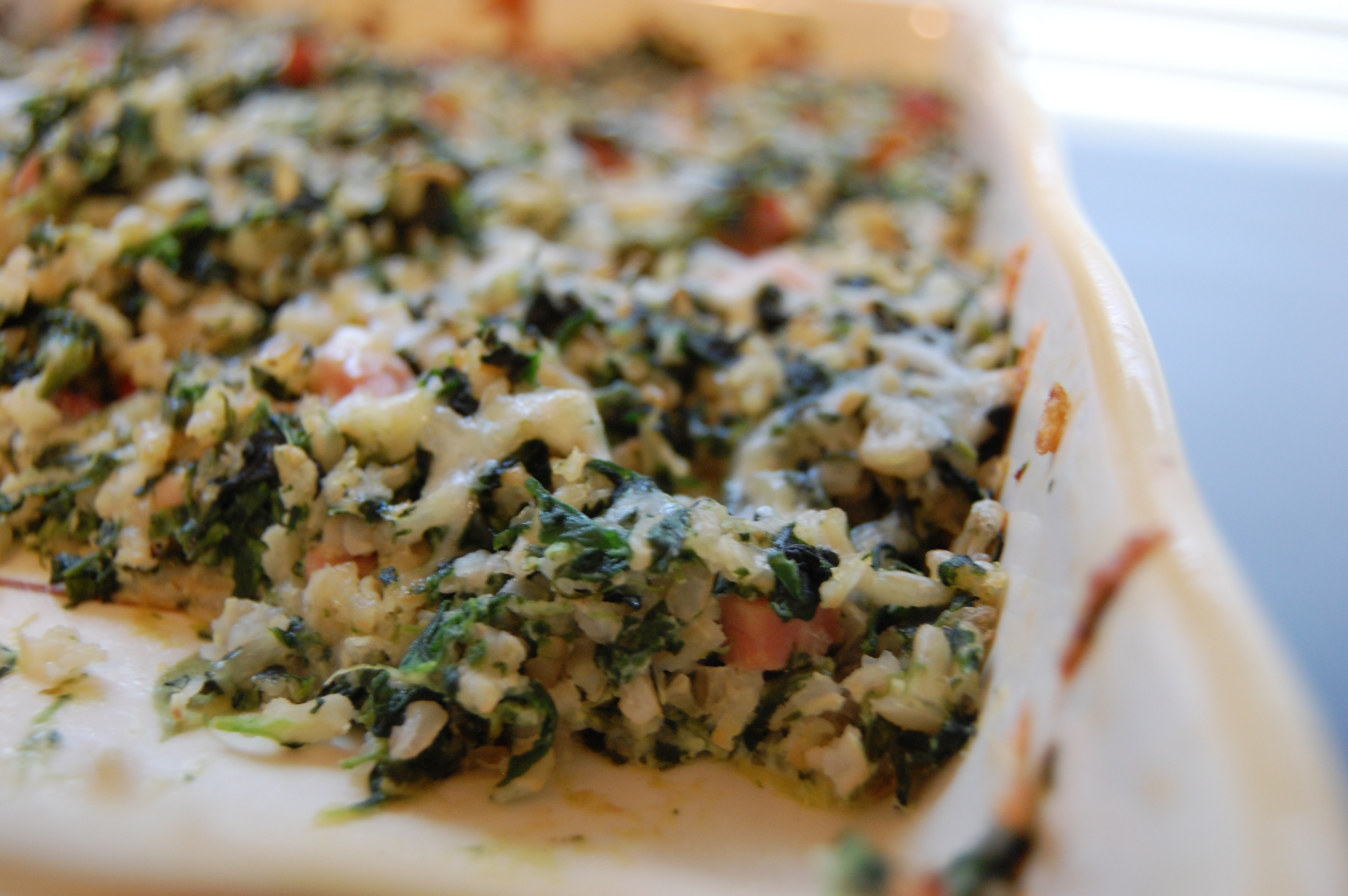
Spinach, Rice and Ham Casserole

If you celebrated Easter last weekend, chances are you have some left over ham in your refrigerator. After burning out on ham and cheese omelets and ham sandwiches, I searched for a unique recipe that would use up my left over ham.

I came across this Spinach, Rice and Ham Casserole from Martha Stewart. The ham gives this casserole a wonderful flavor and the cheese makes it slightly decadent.

Spinach, Rice and Ham Casserole

Two 10-oz. packages frozen spinach, thawed and squeezed dry
2 cups cooked brown or white rice
2/3 c. whole milk
2 large eggs
1 c. grated Gruyere cheese
salt & pepper
1 tbsp. olive oil
1 medium yellow onion, finely chopped
2 garlic cloves, minced
1/2 c. dry white wine
1/2 lb. ham, diced

Preheat your oven to 375 degrees.

In a large bowl, combine spinach, rice, milk, eggs, 3/4 c. cheese,
1-1/2 tsp. salt, and 1/4 tsp. pepper. Be sure to squeeze as much water as you can from the spinach. If you don’t the dish will turn out quite mushy.

In a large skillet, heat the olive oil over medium-high heat. Add onion and
garlic and cook for about 10 minutes, stirring occasionally until onion is translucent and beginning to brown. Season with salt and pepper.

Add the wine to the onion mixture and cook about 3 minutes or until the wine is evaporated. Then, add the diced ham and cook about 2 minutes or until the ham is warmed through.

Finally, add the ham mixture to the spinach and rice mixture and stir to combine.
Transfer to a 8 inch square baking dish and top with remaining 1/4 c.
cheese.

Bake 25-30 minutes or until the casserole is warmed through and golden brown on top.

Now, I just need to find a way to use up all of those hard boiled eggs…

2 Comments

Filed under Cook, Main Dish

Spring for the Senses

There’s just something about spring. Maybe it’s ditching the heavy winter sweaters or maybe it’s the longer, warmer days (it’s definitely not the allergies!) but whatever the reason I find it impossible to not to have a bit more bounce in my step.  With all the newness in the air I’m doing an homage to spring for your five senses today.  Enjoy!

SEE:
It’s not quite time to garden around here yet but you can get your fix of flowers this weekend at the Milwaukee Art Museum’s Art in Bloom event. With amazing floral arrangements tucked among the museum’s galleries and a lecture series with topics ranging from gardening to floral photography, Art in Bloom should give you plenty of new ideas before you plan your plots this year.
Milwaukee Art Museum Art In Bloom

SMELL:
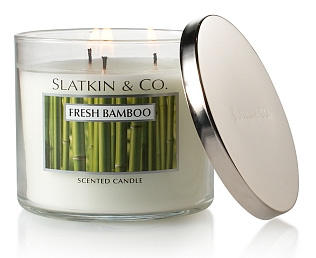
Not in Milwaukee to hit up Art in Bloom? Slatkin & Co’s Fresh Bamboo Candle is like a bouquet in a jar…and not a sickly sweet faux floral smell but that smell that rushes out when you walk into a florist’s shop. If blogs had scratch-n-sniff, ours would smell like this right now. Swoon.
Bath & Body Works Fresh Bamboo Candle

TOUCH:
I’ve been obsessively stalking my flower beds for signs of life, dragging my dog on walks to make mental notes of landscaping and in desperate need of appropriate footwear to do it in. I’ll agree that Crocs aren’t exactly couture but let’s be practical here. When your runway involves garden hoes and dog leashs, these slimmed-down, dirt-is-my-friend Crocs Malindi Flats will look perfect.
Crocs Malindi Flat hot pink

HEAR:
Whether your pulling weeds or throwing open the windows for some spring cleaning new tunes will definitely be in order.  These tracks are on constant rotation for me this spring:
1. “Solitary Gun” Rogue Wave
2. “Don’t Look Back” She & Him
3. “Used to Be” Beach House
4. “Blow Away” A Fine Frenzy
5. “October” Broken Bells
6. “Moth’s Wings” Passion Pit
7. “Dark Halls” Au Revoir Simone
8. “Sea Change” Turin Brakes
9. “Movie Loves a Screen” April Smith and the Great Picture Show
10. “To Be Young” Ryan Adams

TASTE:
An easy goat cheese and spring vegetable salad makes a perfect spring side dish but can easily become an entree by simply adding a protein. I like it with a red-wine marinated flank steak.
Goat Cheese & Spring Vegetable Salad

Goat Cheese & Spring Vegetable Salad
1C orzo or quinoa
1 C green beans
1 C asparagus
1 zucchini & 1 yellow squash
3 scallions
fresh herbs (basil, parsley, mint, chives)
3 oz goat cheese
1/4 C pine nuts
olive oil
balsamic vinegar
coarse ground black pepper
kosher salt
* Options: Peas, mushrooms and kale would all be great substitutes so go with whatever looks good that day. Same with the herbs, although be sure to at least get the basil.

In a large pot, bring salted water to a boil and cook orzo or quinoa until al dente. Transfer to a colander and rinse with cold water until cooled. Let sit while you work with the vegetables. Trim ends off the green beans. Chop beans, asparagus, and squash into bite sized pieces and transfer to a hot saute pan, lightly coated in olive oil. Cook for 2-3 minutes and season with salt, pepper and a splash of balsamic vinegar. Cook vegetable until they are cooked through but still firm. Finely chop scallions and herbs.

Transfer cooled orzo or quinoa to a medium bowl and add vegetables, scallions and herbs. Toss well. Drizzle with 2-3 Tbsp of olive oil and balsamic vinegar until lightly coated. Season with additional salt and pepper. Crumble goat cheese into small pieces and stir in.

4 Comments

Filed under Fab Finds, Main Dish, Sides

Dying Easter Eggs – Au Naturale

We can’t fight it. Nowadays, natural is in. So I decided to take an old Easter tradition back to the good old days and dye them using tea bags. This is a process that my great grandma used to use. It is fun, easy, and it gives your Easter eggs that very natural look that is all the rage. 

All you need to do this is a pot, eggs, water, vinegar and tea varieties of your choice. I used passion fruit, blueberry and chai tea. 

To make the eggs:

Place the eggs in a pot and cover with water. Bring to a boil. Add 2 TBSP of vinegar and a 2-3 tea bags. Allow to boil for 10 minutes. Turn the eggs every once in a while to make sure the color sets in evenly. Remove from water and place on a drying rack. 

The chai tea turned out to have the boldest color and the passion fruit and blueberry gave the eggs a purplish-gray color. These eggs would be great for a centerpiece for Easter brunch or outside for an easter egg hunt!

Rumor has it that you can use other household kitchen items, such as spinach, different spices and onion skins. I have yet to try this. If you’ve tried it, please share with us, or share any of your other fun Easter traditions!

Have a blessed Easter!

2 Comments

Filed under Decorate, DIY, Holidays